Rachel Elliot’s longing for motherhood
The GodmotherRachel Elliot’s longing for motherhood unsettles the life she has built around professional achievement, independence, and control. At first she treats having a child as a decision she can make and organize; as the desire persists, it exposes how little certainty she has about what fulfillment means, what motherhood will cost, or whether the people she loves can share the future she imagines.
Identity and the first decision
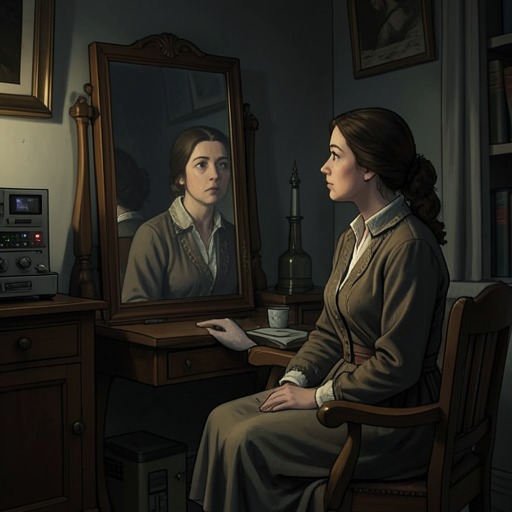
The desire takes definite form when Rachel writes in her diary, “I have decided to have a child.” Even putting the thought on the page has been difficult: she has avoided her diary for days, afraid to commit so large a decision to writing. She chooses a hurried moment before Anita Cavanagh arrives, and tries to make the entry lucid for the invisible, judging audience she imagines in her own head. The scene makes the decision both emphatic and unsettled: Rachel can state what she wants, but cannot yet make the statement feel simple or secure.
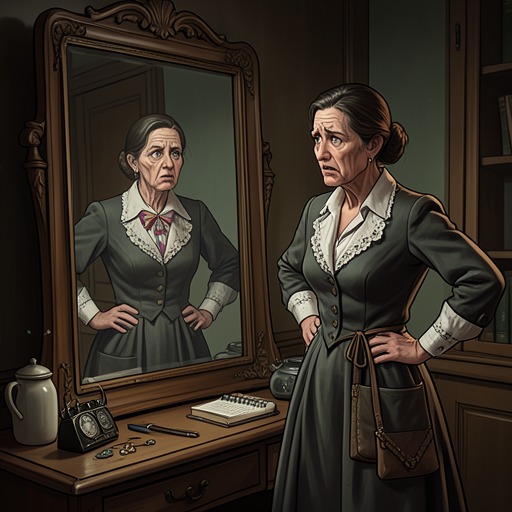
Her wish gathers force alongside a crisis of self-confidence. On the drive to a work-related Christmas party near Bristol, Rachel recognizes that she has lost belief in herself and no longer wants to be herself unless something fundamental changes. Having a baby appears as that change, but the thought circles with an insistence she cannot control. She questions whether she is merely bored with being selfish, then recognizes that freedom to shape her own life—once a hard-won privilege—has become hollow when she no longer knows what she wants from it. Motherhood promises a new focus, but the intensity of the longing also frightens her: it seems to offer direction precisely when her familiar ambitions no longer do.
A chosen route, and its limits
Rachel first tries to turn the desire into a practical arrangement with Nathan Kramer. In a hot tub, amid champagne and an increasingly difficult attempt to speak, she asks him to provide the means for her to have a child. She stresses that she would raise the child on her own and would not later demand money or parental commitment; she even offers to put the arrangement in writing. Nathan initially mistakes her request for news that she is already pregnant. Rachel corrects him and explains that she wants only the act itself, not a different kind of relationship. Her proposal shows how strongly she is trying to preserve her independence even as she seeks a child: she imagines motherhood as something she can pursue without surrendering control of the rest of her life.
The arrangement she proposes does not settle the desire. At a gathering after the troubled Bermuda shoot, Cliff Weybourne asks whether she is still interested in having a baby. Rachel laughs it off as a whim and says that she has a cat instead. The cat’s return from her trip has, however, affected her: she is overcome with pleasure at finding it waiting at home and gathers it into her arms. Its stiff, baffled response does not diminish the welcome she feels in giving or receiving. Her breezy dismissal in public sits uneasily beside the private intensity that remains, a contrast between the answer she can offer casually and the longing she has not managed to put aside.
Rachel also sees the costs of motherhood at close range. Anita’s career plans had narrowed as she repeatedly chose to follow Giles Cavanagh rather than take regular work in London; after her children were born, she experienced both consolation and the exhausting confinement of care. When Rachel announces her own hopes, Anita argues that a child would threaten her independence and leave her divided between work and home, even if she could afford a nanny. Rachel receives the warning as a rebuke, not simply as advice. Their exchange exposes the distance between the freedom Rachel wants to retain and the daily demands Anita knows firsthand. Anita’s own difficulties do not make her a neutral authority, but they give her resistance a lived context.
Work, family, and the meaning of fulfillment
The question is not only whether Rachel can fit a child into her schedule. During a long drive she considers why motherhood appeals to her and realizes that it offers fulfillment beyond the career to which she has attached much of her emotional life. She is still unsure whether to remain at McKenzie Cartwright or resign, and resents that the question of work seems to occupy so much of her sense of the future. Wanting more avenues through which to live feels healthy to her; visiting Robbie Dexter is part of that opening, though it is also shadowed by her separate, secret wish to become a mother.
Her recollections of early advertising work sharpen this conflict. As a young professional, she had inwardly scorned an account director who arrived late because his seven-week-old daughter had smiled at him for the first time. Looking back, Rachel recognizes the courage it took for him to bring that private joy into a boardroom. She also thinks that the women with children at McKenzie Cartwright would not risk making a similar admission, for fear of how colleagues would judge them. Her changing view marks a shift in what she considers legitimate: the emotional claims of family, once easy to dismiss beside work, now expose the gendered pressures shaping who may acknowledge competing priorities.
The costs are also visible in Naomi Fullerton’s account of her marriage to Graham. After fifteen years and four children, Graham wants a divorce and has left for another woman. Naomi says she gave up a good degree and a job in media planning to help build the life he wanted; now, though she loves her children, she describes them as a burden that keeps her financially dependent on a man she no longer loves. She estimates that she will remain dependent until her youngest daughter finishes university, eighteen years away. Rachel does not receive Naomi’s story as a simple argument against motherhood. It makes the consequences harder to idealize: love for children can coexist with lost earning power, constrained choices, and the long afterlife of a partner’s decisions.
Secrecy, uncertainty, and the changing future
Rachel’s reunion with Robbie makes her longing more consequential. As their confidence in a shared future grows, she has sex with him without taking precautions, while allowing him to assume she is still using contraception. After a private struggle with her conscience, she seals her contraceptive cap away in her vanity case and leaves it there for the duration of her visit. She tells herself that at almost forty every cycle counts, that she can cope alone if the future with Robbie disappears, and that her confidence in their relationship is increasing. Yet the concealment troubles her during their intimacy; she sometimes thinks his searching looks suggest he senses that she is withholding something. The act turns motherhood from a wish she discusses or plans into a covert attempt at conception, one that risks the trust on which the renewed relationship depends.
The future with Robbie brings its own complications. When Rachel’s mother’s excitement about the relationship prompts Anita to joke about wedding bells and christenings, Rachel resists the assumption that she knows where the romance will lead. Her hesitation is especially telling because a child is not merely an abstract aspiration: the prospect is now bound up with a fragile relationship and with choices she has kept from Robbie. The uncertainty she tries to master through planning returns as a question of what other people may choose, discover, or be able to offer.
During a difficult stay with Robbie, Rachel comes across the fertility article “WHY IS THIS SO RARE?” Its headline asks whether conception is becoming increasingly problematic and notes growing demand for infertility treatment. The article gives her longing a medical and social frame beyond the private calculus of age and opportunity. That frame becomes personal when Will Raphael tells her that he cannot have children: he has congenital absence of the vas deferens, a condition he discovered while married to Ginnie. Will explains that it was among the many things that depressed Ginnie about him and about life. His disclosure makes clear that desire alone cannot secure the outcome Rachel wants, and that the question of children carries histories of grief for others as well as hope for her. The longing remains decisive, but its ending is not resolved by a plan: it has brought Rachel toward intimacy, secrecy, and self-questioning, while leaving the possibility of motherhood dependent on circumstances she cannot fully control.